
Why Rooftops Offer a Different View of Cities
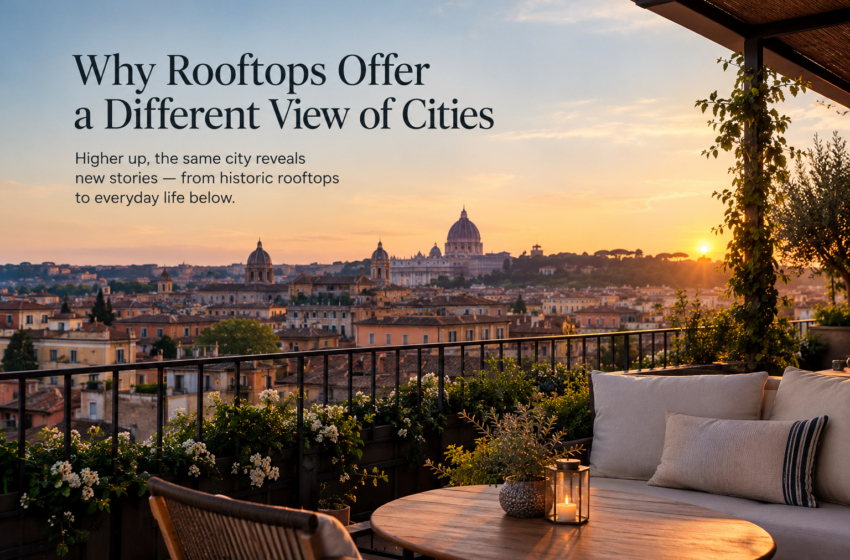
Most travellers have a street level experience of the city. They wander through the markets, cross through historic squares, visit museums and take in buildings from the street. But there’s another world above these familiar scenes. A rooftop is a surface, which looks down, but from a view that might not be obvious from the street. The chimneys, terraces, water tanks, gardens and distant skylines provide a different set of images that tell something of urban life.
Rooftop venues provide a chance to experience a familiar place from a different angle for travellers who aren’t looking for a traditional sightseeing experience. Some show panoramic views of historic neighborhoods, others offer glimpses into the everyday life of people as they live, work, and adjust to the close quarters of city life. Whether it’s from a public observation deck or a rooftop garden or a historic terrace, these places on elevated ground invite guests to see the city in a new way.
A City Revealed from Above
Buildings at street level are just buildings, vying for attention. Their relationship is more apparent from above. Rooflines define patterns; streets are lines that cut through neighbourhoods; and open spaces appear as openings in overbuilt areas of construction.
This broad view can aid travelers to appreciate the evolution of a city. Older districts might have closely grouped buildings, slanted roofs, and newer districts might have larger buildings with wider roads and planned housing developments. A panoramic view of the industrial zones, waterfronts and railway corridors becomes more apparent when seen from a higher level.
The landscape also demonstrates the impact of geography on urban design. This phenomenon is common in cities that developed near a river, coastline or hills. Rooftop perspectives can depict the ways in which bridges link the two districts, bridges, buildings along slopes, or the radial expansion from an older centre.
It offers context for those who like to comprehend space and places, not just take photos of them. A city starts to feel more like a city, and not just a cluster of places to visit.The city becomes more than just a set of places to visit; it becomes a city defined by history, infrastructure, and human activity.
The Beauty of Everyday Rooflines
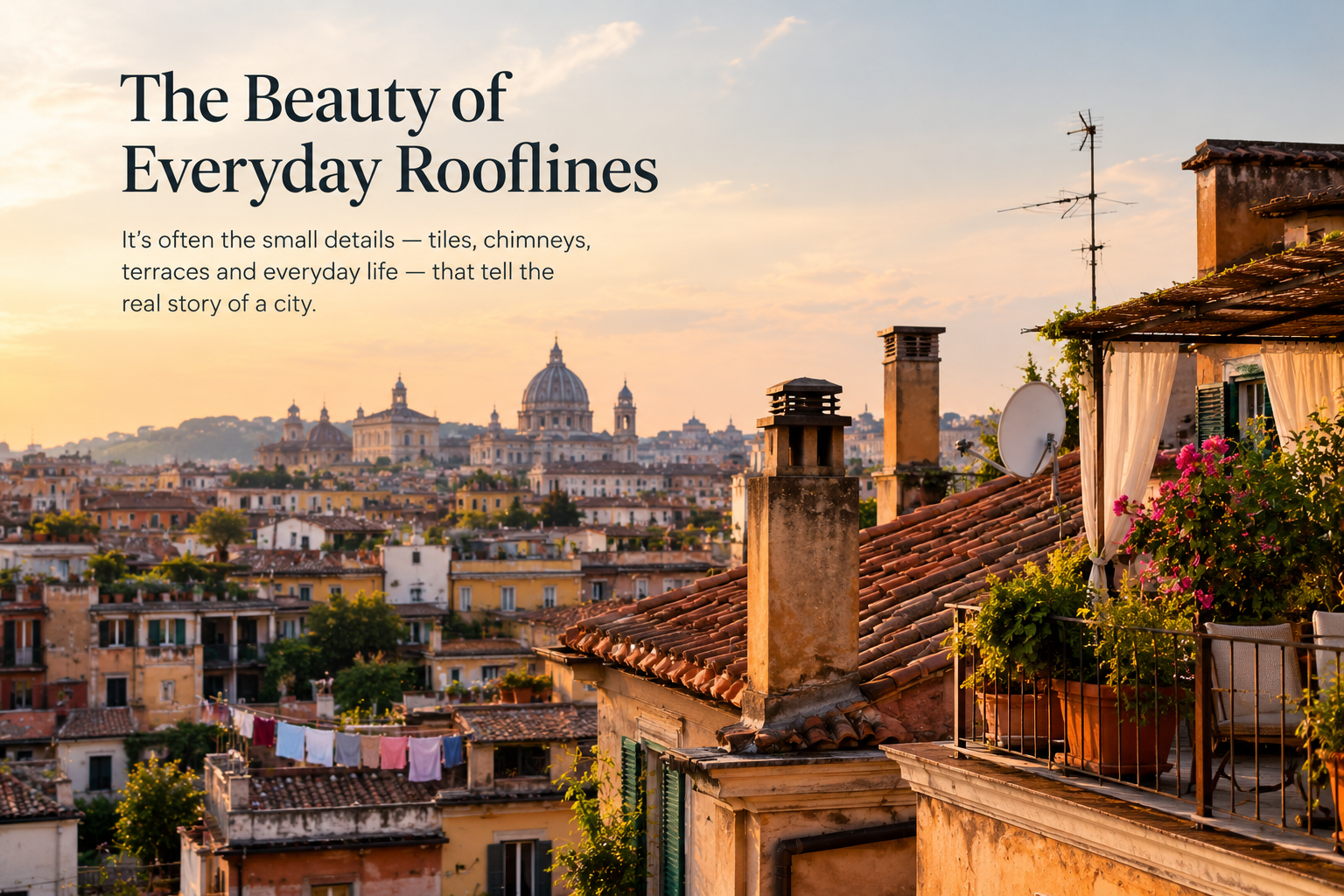
Not all rooftop views have to have a dramatic skyline. Often it’s the boring things that don’t get noticed on the street that are the most interesting.
Neighbourhoods have a visual identity, they can be defined by terracotta tiles, weathered chimneys, satellite dishes, laundry lines and small terraces. These are subject to local life, building traditions and climate. Warm-toned tiles and shaded terraces might be found on a Mediterranean town, whereas a dense collection of utility structures, greenery and modern buildings might be found in an Asian city.
Rooflines can also reveal the layers of a city’s history of architecture. A historic building can be adjacent to a modern apartment block, or an old industrial building may have been used to make offices or cultural centres. These contrasts then come to form a larger composition from above.
The views are not always as polished as an official city panoramic. That’s what makes them interesting. They depict the city as it exists during the day, not just the buildings chosen to portray it.
Rooftops as Social Spaces
Since ancient times, roofs have had other functions besides providing cover. In many areas they offer extra living space in places where there is a lack of space on the ground level. They can be used for gardening, drying clothes, socialising, exercising or just getting some fresh air.
Topographic characteristics and the nature of housing are often indicative of the rooftop. In warm areas, terraces can be extensions of the house and provide a space to hang out after dark. Shared rooftops can offer outdoor space that is difficult for individual apartments to offer, in dense neighbourhoods. Roof terraces may be more utilised seasonally, or for colder climates, be designed with sheltered spaces and heating.
For visitors, these areas are reminders that urban experiences are lived differently by urban residents. A rooftop café or public terrace might offer another perspective on the changing pace of a neighbourhood, one that is not captured by what is going on at the ground level.
But, not all rooftops are public spaces. Do not enter residential roof tops, private terraces and building service areas without permission. They should select viewpoints that are officially accessible, licensed and/or guided experiences which respect property boundaries.
From Industrial Space to Urban Attraction
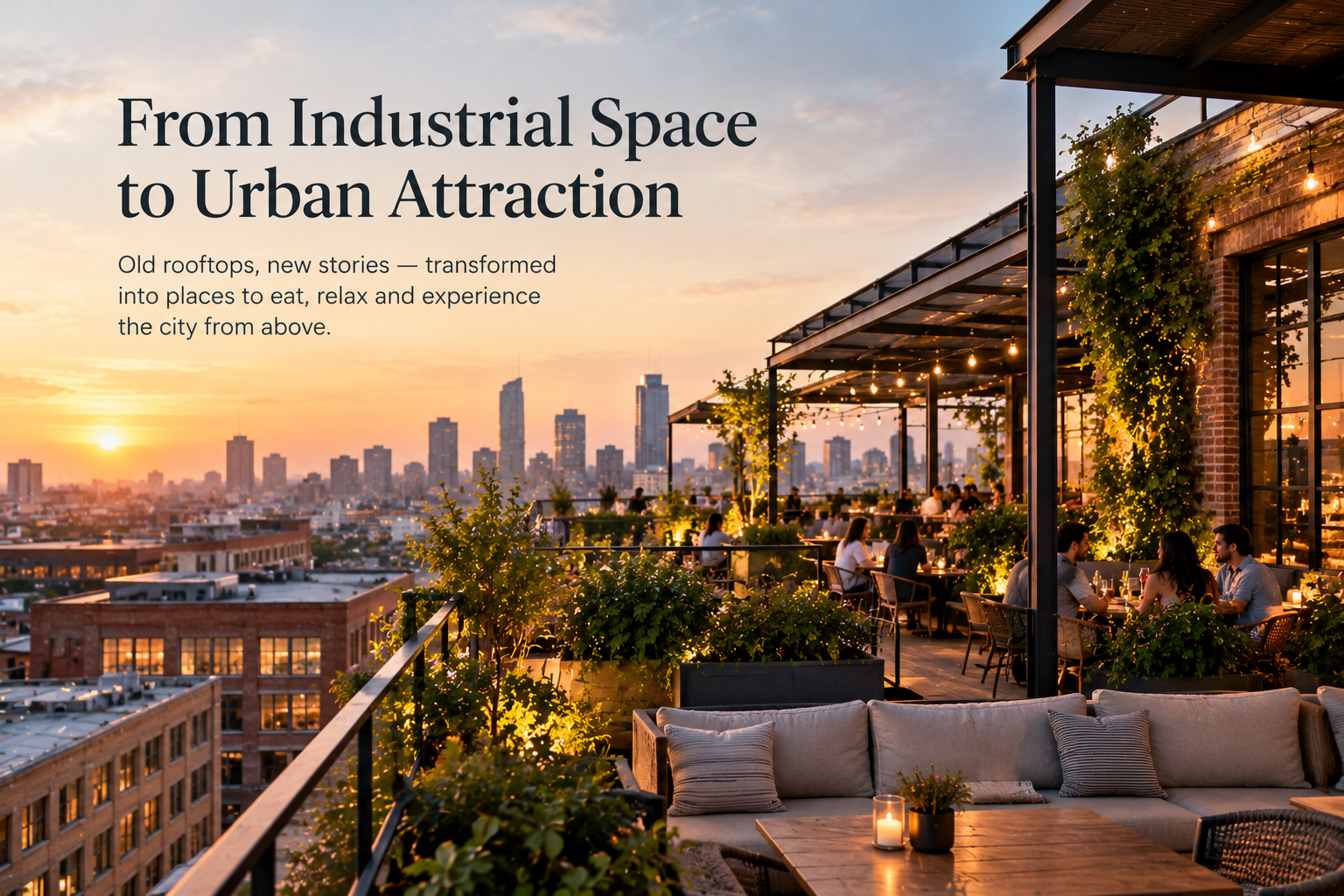
Being able to transform underused rooftops into recreational and hospitality space was one of the most prominent architectural developments. The incorporation of terraces, restaurants, gardens and observation areas in buildings designed for use in offices, factories, warehouses or commerce is becoming more common.
The trend is in response to the increasing demand for outdoor experiences in dense urban settings. It may be possible to open up old buildings at the upper levels, creating opportunities for leisure without the need for large areas at street-level, where land prices are high and open space is limited.
Former industrial buildings have been converted into cultural facilities and hotels and shopping centres have set up terraces to welcome tourists who like to look out as well as to eat, drink and enjoy. These developments can offer a new function to old buildings, however it is vital that they are designed with care and that they are looked after and respected by the neighbouring community.
Rooftop destinations also affect the evening plans of travelers. Visitors don’t need to go from one restaurant to another and from one viewpoint to another, but can enjoy restaurants, architecture and scenery all together. The height of the tower is not the only thing that makes it an attraction, it also has to connect people to the rest of the city.
The Rise of Rooftop Gardens
Rooftop gardens are one way to make use of space that is above grade and create a positive impact on the environment as well as provide an eye-catching view. The plants on the rooftops can help to provide shade and promote biodiversity, and can also help to reduce the amount of heat absorbed by certain building surfaces. These gardens can also help manage stormwater and provide outdoor areas for residents and visitors to enjoy, depending on their design.
Rooftop planting can add vegetation to the urban landscape where concrete and asphalt are predominant in cities where green space is not evenly distributed. Projects may include ornamental plantings and seating, or vegetable gardening, pollinator friendly planting, or education areas.
These gardens also can transform the experience of looking across a city. The scene encourages the viewer to look at something other than hard surfaces and mechanicals, as the greenery breaks up the skyline. In dense urban districts, the contrast between a planted terrace and nearby buildings may be quite dramatic.
Yet, rooftop gardens cannot be the whole answer to urban environmental problems. They work well under a variety of planting and watering conditions, structural capacity and maintenance. They are most effective when used in combination with other features such as accessible public space, street trees and park space. Rooftop gardens are a great way for sustainable design enthusiasts to see how cities are implementing more sustainable buildings.
Explore familiar places through new perspectives
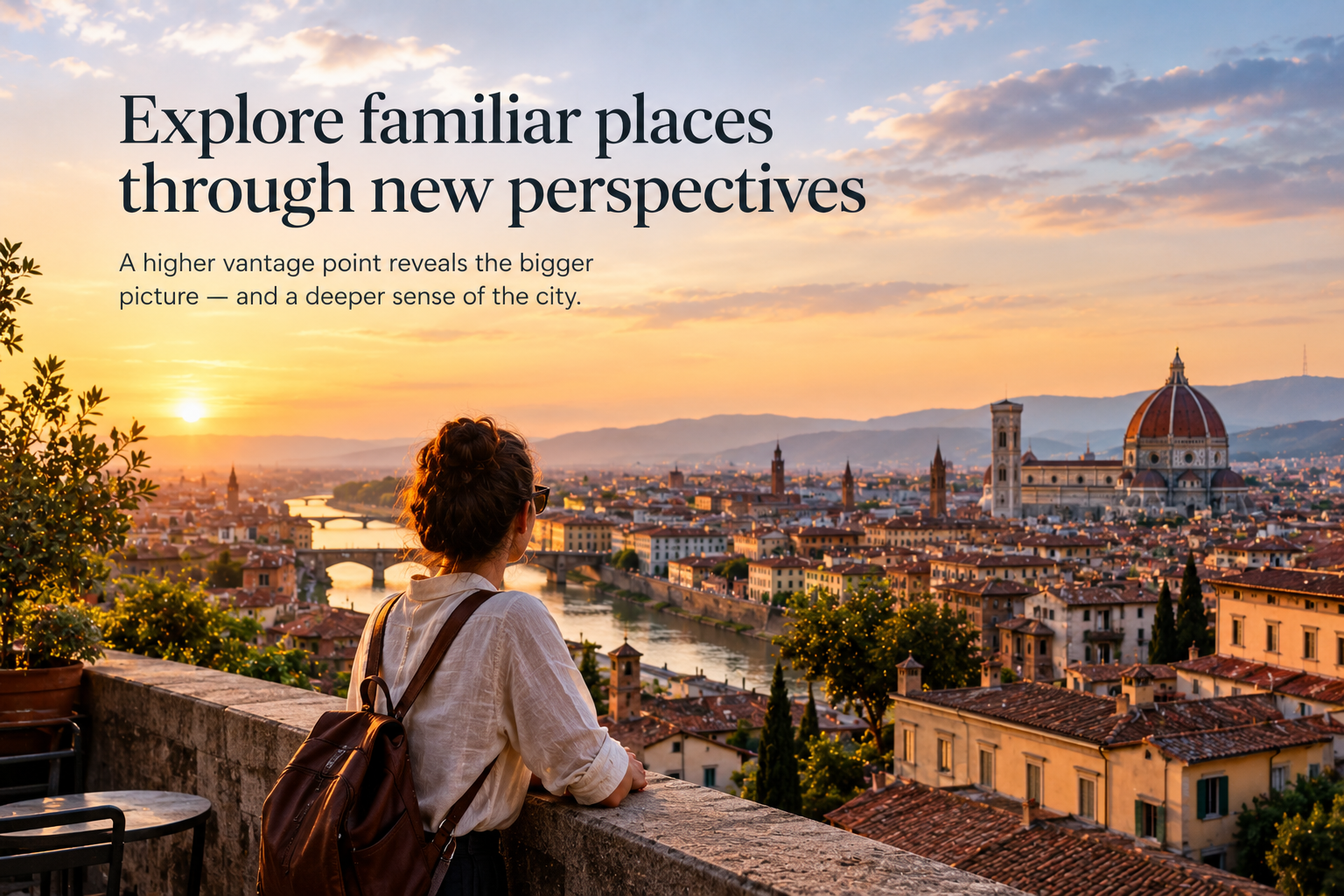
A popular landmark can appear quite different from the ground up compared to from the roof of a building. The shift in perspective might show up where it is located in the city, where surrounding buildings are placed or where the surrounding landscape is set out.
The elevated vantage points also help visitors to see views that they might otherwise have missed out on. The church tower may tower over a low roofed neighbourhood, a historic dome may stand in the foreground between modern buildings or a distant bridge may link the foreground to the far bank of a river.
These perspectives could assist travellers to have a better sense of direction. Viewing a city from the sky can help to illustrate how its districts fit together and how significant roads, parks and waterways affect travel.
Experience is especially rewarding at various times of the day. The buildings can show up in different ways depending on the time of day – in the morning, architectural features might become visible, or in the late afternoon, roof textures and shadows might be highlighted. Night-time, lighted streets and windows provide another perspective on urban life, but weather and access limitations and safety conditions always dictate the point of view.
The streetscape along the riverside is quite stark
They have also unlocked the possibilities for rooftop attractions in the hospitality and tourism economy. Elevated settings are used in hotels, restaurants and entertainment venues to provide unique experiences, with the view commonly playing a significant role in this.
A roof can make a difference in a business’s competitive landscape. It makes a difference for the visitor when they are looking at one location versus another, especially if it’s a scenic experience and local cuisine is involved, as well as design or cultural programming.
However, rooftop events are becoming more popular and access is a concern. There are also many beautiful vantage points available exclusively to paying customers and, consequently, the best views might not necessarily be located in public areas, but in private businesses. For some urban areas, public observation decks, as well as parks located on elevated structures or accessible terraces are available.
A balanced urban landscape can include multiple perspectives from various locations including commercial spaces and sites with space for residents and visitors to enjoy without spending a lot of money to gain an expensive experience. Rooftops are best when they are integrated into a larger system of public spaces, and not served as standalone spaces.
This book examines how cities change by analyzing rooftops
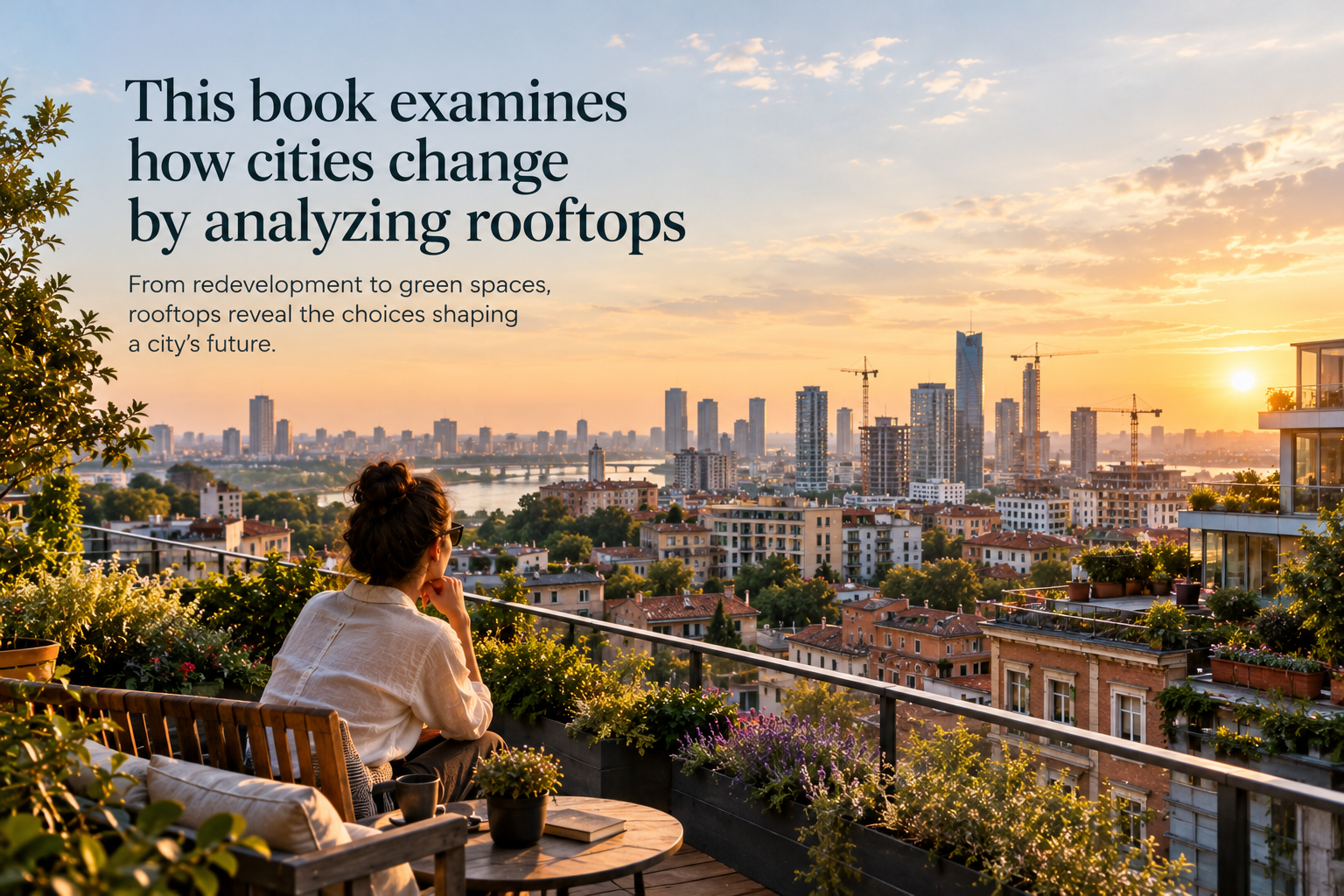
The view from across a city can show the pressures that affect the future of the city. Old neighbourhoods can be complemented by new buildings, cranes can signal redevelopment, and growing residential areas can reveal housing demand’s impact on the skyline.
The view may also show differences in income and facilities. The differences in height of buildings may be indicative of more general inequalities in the urban environment, as may the differences in standards of maintenance and access to green space. These observations do not account for all of the causes, but can encourage travellers to think about the impact of development choices on the people who live in those places.
Rooftops are also examples of the reuse of space in cities. The building service surface can turn into a garden or a meeting area. The public terrace can be a former industrial building or it might be part of a new development design. The skyline is not a complete image, therefore. It is an account of continuous decisions regarding land, housing, work, leisure and priorities for the environment.
Before taking off, look up and see which way to go
Rooftops provide travelers more than great views. They offer an insight into urban form, living in the city and into how buildings adapt to meet evolving needs. Elevated locations can make visible things we don’t notice when we take an ordinary stroll down the street, whether a residential terrace or a designed public viewpoint.
The highest roof-top doesn’t necessarily mean the best. It could be from a still and contemplative terrace overlooking an old neighbourhood, a garden high above a bustling commercial area, or a vantage point to see how a river moulds the city.
Travelling up and out of yourself provides a wider lens on places you feel you know. They observe the relationship between buildings, the vertical layers of the cityscape and the continuous evolution of urban areas. In some cases, it’s better to learn about a place by getting out of the crowd and taking in the big scene from the air.
