
How Airport Shopping Became Part of Travel
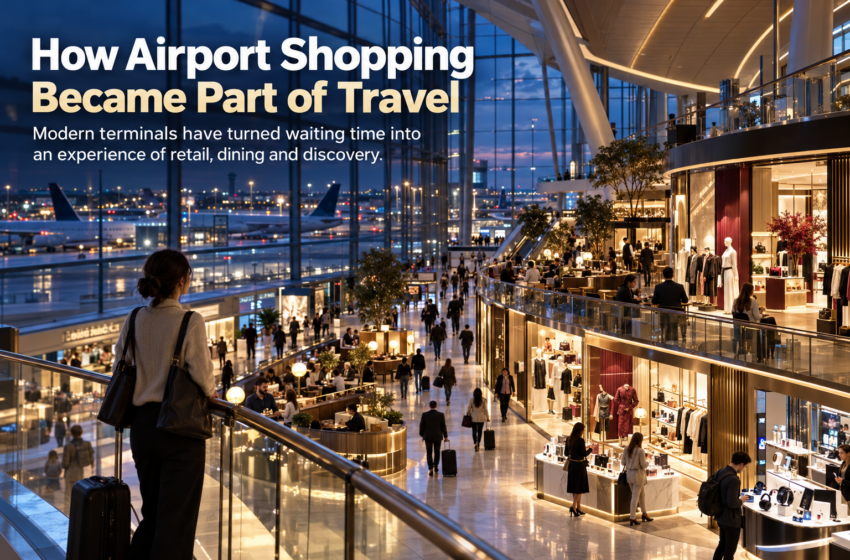
In the past, airports were the only place to do shopping primarily out of necessity. Before getting on the bus, passengers purchased a newspaper, grabbed a snack or looked up a last minute travel necessity. In fact, today, many big airports have a more luxurious feel and look about them, with luxury shops, international fashion brands, beauty counters, electronics outlets, and nicely planned dining facilities. Shopping has been added to the passenger journey, and sometimes starts as early as hours before a flight.
This shift has been brought about by the evolution of consumer expectations, airport business models and travel experience. Airports are no longer just a place to pass through, they have become a commercial destination by themselves.
From Duty-Free Counters to Retail Destinations
The emergence of duty-free retailing contributed to the airport becoming a shopping environment.The growth of duty-free shopping helped to make airports a retail environment. Under local regulations, duty-free stores enable qualified foreign visitors to buy certain items without paying certain taxes and duties that would be applied when buying in the country. Common categories of commodities were the ones that travellers were familiar with, such as tobacco, alcohol, perfumes and cosmetics. As the years passed, the airport retail evolved from these traditional products. More than what was seen as an everyday shopping destination, fashion, watches, jewelry, confectionery and technology accessories were increasingly on display, adding to the shopping experience. Because the airport terminal provided brands with passengers in their waiting areas, sometimes with enough time to depart, the terminal was a convenient place for brands to reach.
Why Airports Attract Major Brands
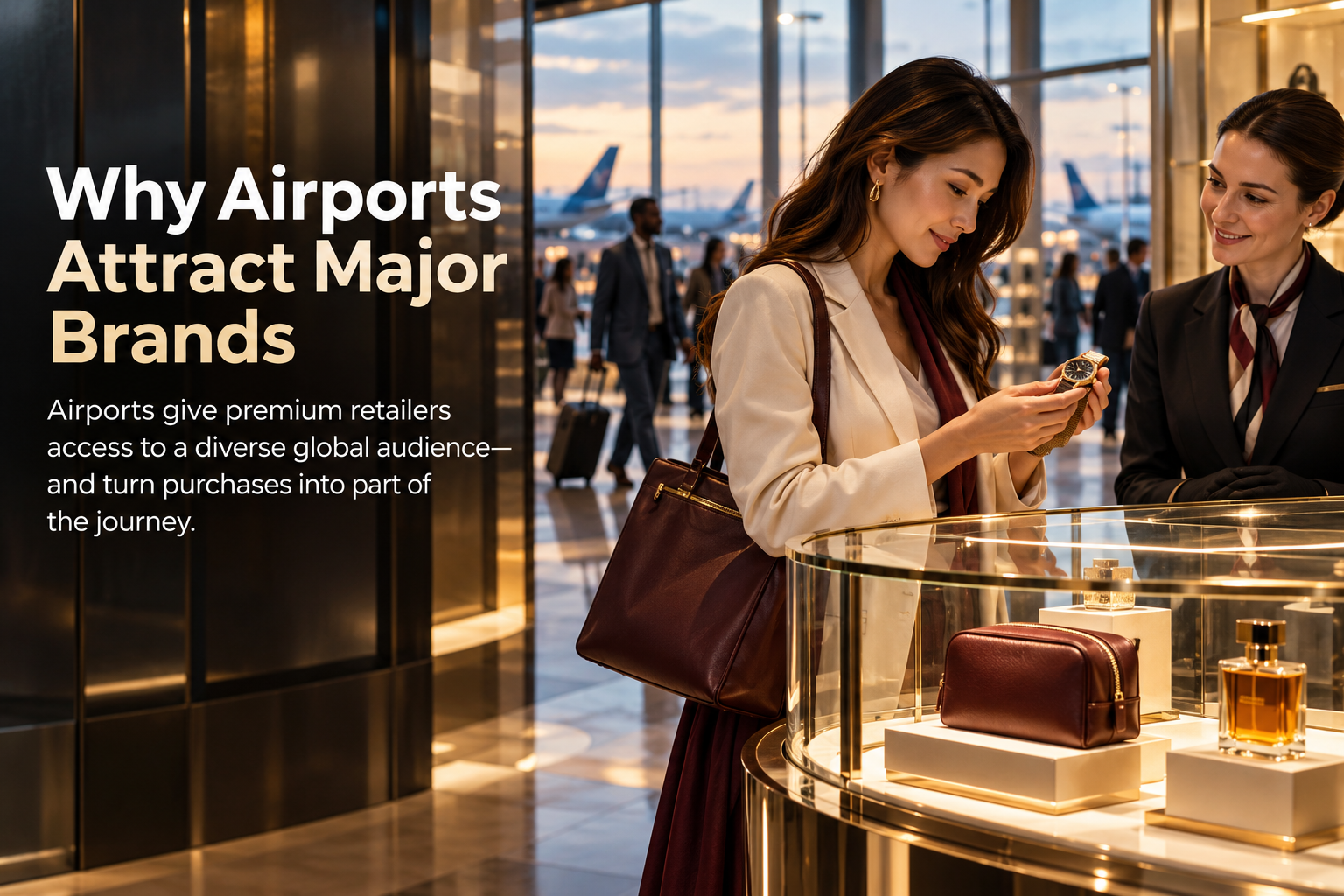
Retailers have a unique setting at airports. They have customers from various countries, income levels and professions, which means that they can communicate with an international audience within one region. Airport shopping malls are ideal for premium brands to present products to passengers who may not go to their high street outlets. Some passengers would experience a difference between buying a luxury item on a journey as compared to an ordinary shopping trip. With the airport as the setting, the purchase is more memorable, and a holiday, business trip or special event is created for it. But airport operations are costly, concession fees must be included, security needs exist and delivery may be subject to limitations and the commercial conditions set by the airport operator.
The Psychology of Shopping Before a Flight
Shopping at airports is largely time dependent. It is common for passengers to arrive before their flight, check in and go through security without getting on the plane. Retailers can engage customers at this time, when browsing may be a time-filler. When people are traveling they are more likely to purchase something linked to a holiday or a much-anticipated trip. A perfume, gift or accessory can be a reminder of the trip itself. However, airport shopping isn’t always spontaneous. Many travellers shop around, buy specific items or make plans ahead. The availability of time, travel excitement and convenient access are only a few reasons that make retail so intertwined with the airport experience.
Luxury Shopping is the main attraction
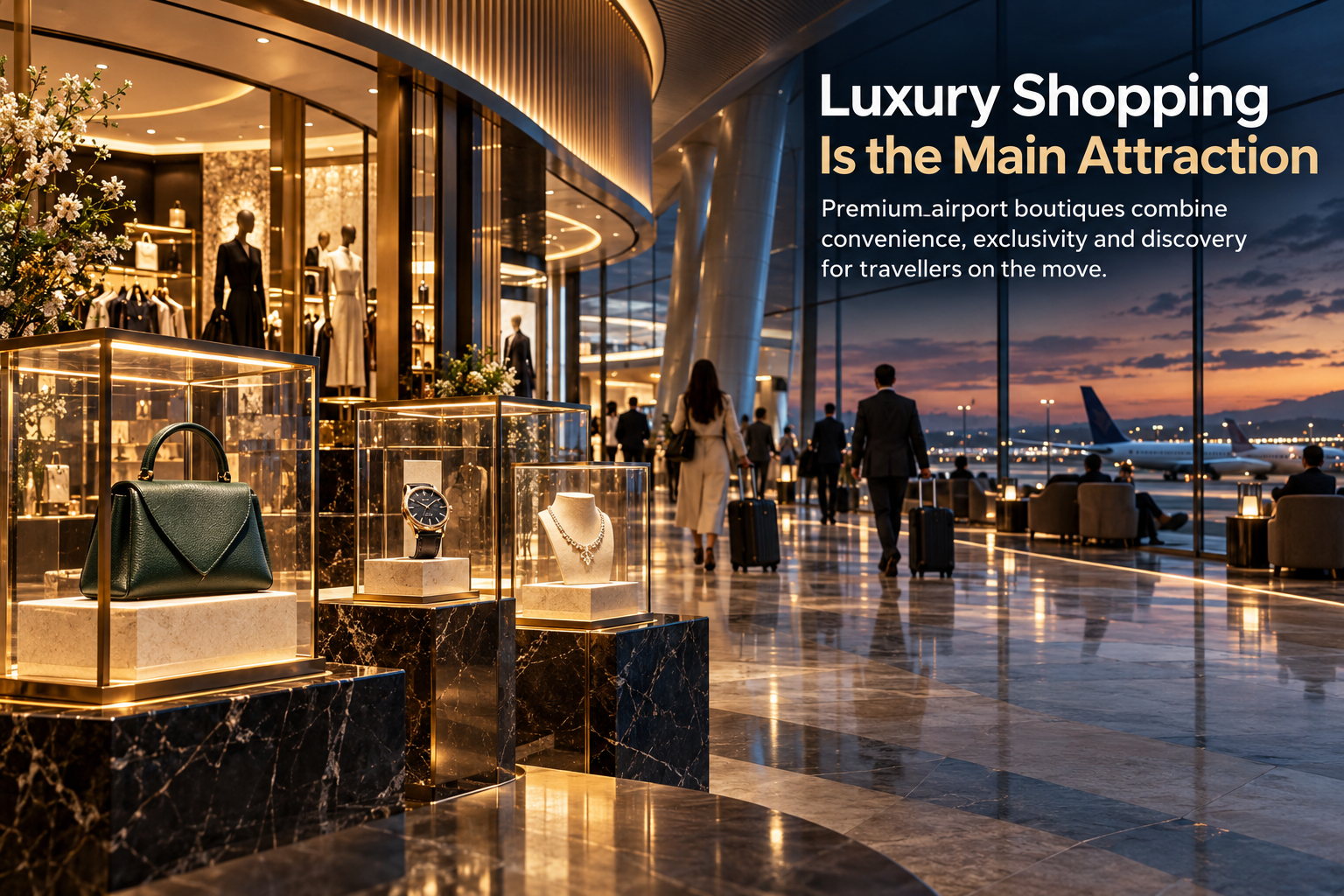
It is particularly noticeable at the major international airports that have luxury retail outlets. The designer handbags, designer watches, designer jewelry, and high-end fashion are prominently displayed in the terminals where there are high numbers of international passengers. These stores will enable airports to rival other commercial destinations, and luxury brands will be able to access the traveler who may not have enough time to visit other stores. The setting could also be used to introduce new customers to an unknown brand. But it can’t beat the city centre and shopping mall luxury shops that offer the luxury customer more time and choice. Convenience, product availability, service and the overall experience influence its appeal, not location.
Food is now an integral part of airport retail
Shopping at the modern airport is not the only offer a commercial service has to offer. Important elements of the passenger terminals are the restaurants, cafés, bakery and special food outlets. Travelers are getting more than they are used to when it comes to fast food or the typical coffee counter. Airports reciprocate with international restaurant brands, regional cuisine and outlets based on varying budgets and travel time. Food is another link between airport retail and the destination. A tourist coming into town from abroad may discover local specialties, and someone coming from abroad may discover familiar international souvenirs. For the airports, eating is a new way to nourish the passengers and also to obtain commercial revenues. For travelers, it can provide a more pleasant and comfortable wait time, enhancing the overall travel experience.
The design of an airport is crucial
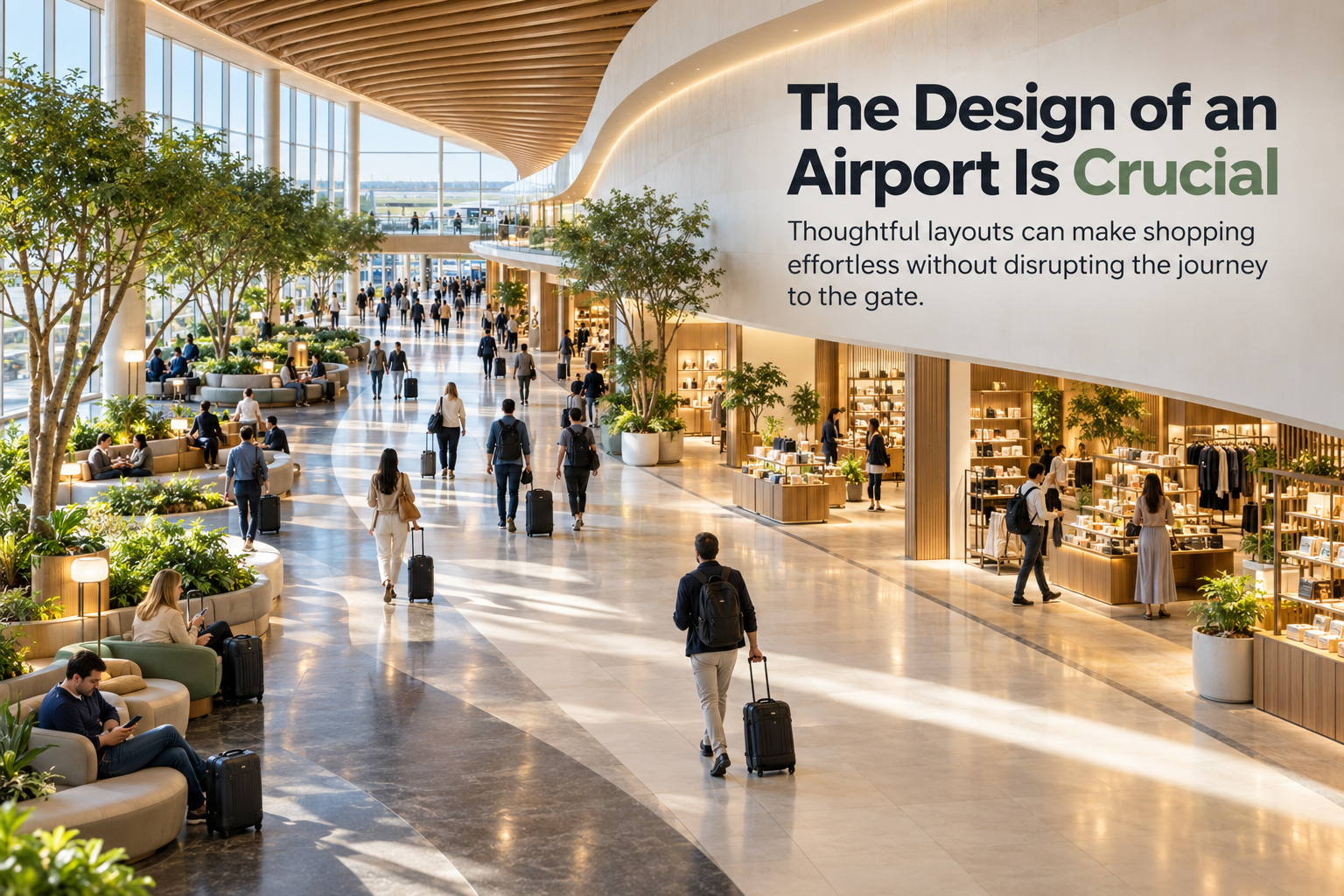
The design of an airport has an impact on the willingness to shop. When shopping feels like a hassle, walking paths, seating areas, pretty lights and strategically placed businesses can make it seem like it’s a breeze. Retail areas are positioned right along passenger routes at some terminals, so they are hard to overlook, and more visible. Others develop their own shopping streets or open-plan areas for the visitors to wander before arriving at their gates. Commercial considerations and passenger requirements still need to be taken into account when designing. Travelers should be provided with easy instructions, enough time to get on board and convenient access to services. Confusion and crowding in retail can hurt the retail experience. Good design allows for shopping without interfering with the path to/from the airport.
Technology has revolutionized the shopping experience
Digital technology is opening airport retail new opportunities to reach passengers. There are several airports and retailers that provide a pre-order facility online so that the travellers can make reservations to buy items before they reach the airport. Digital signs can alert customers to offers, product availability and store location, and mobile services can make it easier to navigate the large airport complex. These are especially helpful for travellers with a short time between security and boarding. They also enable retailers to link shopping to the entire journey, rather than just walk-in sales. But it has to be easy to use and backed up by solid fulfillment. When the collection time or product availability is uncertain in a digital service, it can easily cancel out any convenience factor.
But are airport prices really better?
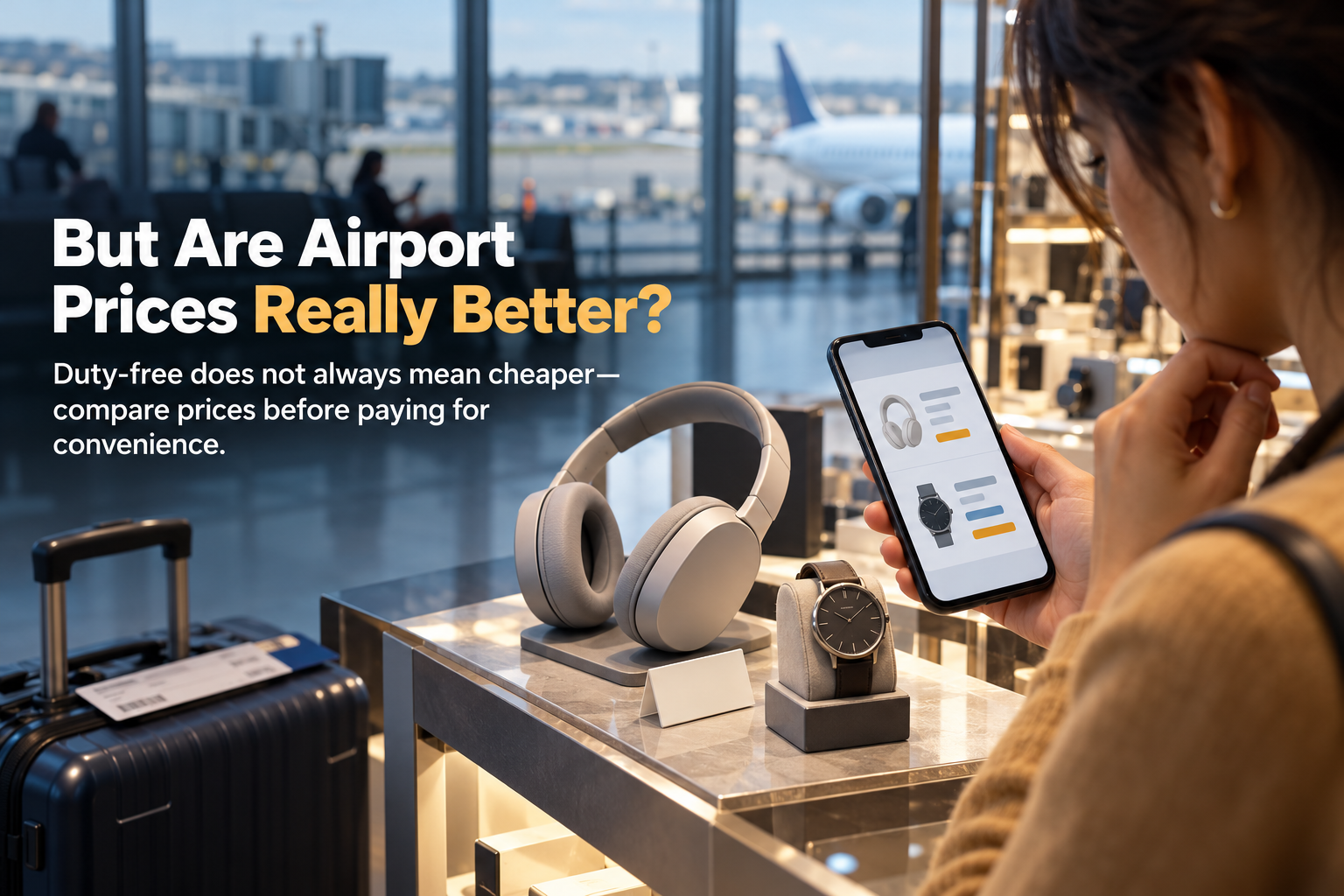
It is a long-held misconception that the airport shops are a great place to save money, but that’s not always true and depends on the product, location and tax structure. Everything is not necessarily cheaper duty free than it is in the city store/online. The retail price may be influenced by the costs of airport operations, brand positioning and local competition. Those who think that the price of any airport purchase is good may be disappointed. For pricey items like designer accessories, electronics and watches, it is particularly helpful to make comparisons before heading out. Accessibility and convenience, more than price, are becoming an important factor in the appeal of airport shopping. Retailers can boost trust with consumers who have more avenues than ever for comparison shopping.
The Business Behind Airport Retail
Many airport operators are interested in retail revenue because it serves as another source of income other than airline charges and passenger fees. Commercial areas can be leased to retailers or can be operated by specialist concessionaires. These arrangements are successful due to the amount of passengers, their spending habits, the design of the terminals and the type of businesses located there. If travel is disrupted internationally, this will impact sales of products, and if there is a change in the demographics of the passenger population, this will have an impact on which products are performing well. Couplely, airport operators need to take into account the commercial interests as well as the airline, security and passenger interests. Airport retail is an intricate industry where the location, the amount of passenger traffic and the overall shopping experience all play a role in performance.
What will happen to Airport Shopping?
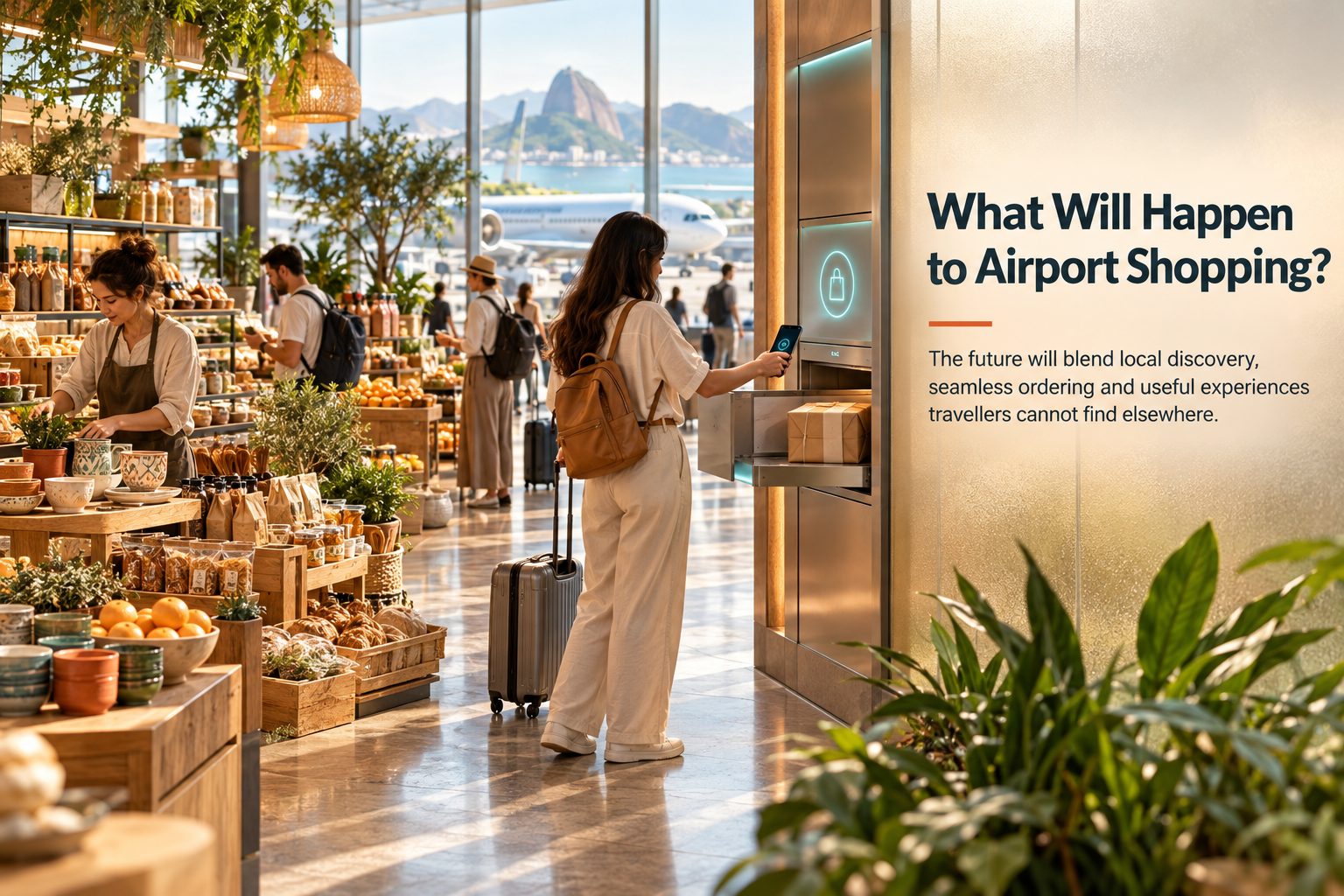
With the evolving expectations of the passengers, airport shopping will probably be on the evolution path as well. Today, travellers are looking for more convenience, unique experiences and time-saving services. Airports could offer a greater array of local brands, niche food, online ordering and retail areas that seem more in tune with their destination. Online shopping, meanwhile, provides greater choice and makes comparison more simple for consumers; forcing airport retailers to come up with real reasons to shop on-site. The best airport retail will be both functional and offer products and services that customers can’t easily get elsewhere.
It’s not just a place to buy something
Airport shopping is a part of travel as it combines the time, convenience, retail and the excitement of travel. Duty-free counters set the precedent, and upscale hotels, food and digital services added to the expectation of travelers. But shopping is just one of the airport experiences. Travelers require good information, comfortable waiting areas and reliable access to their gates. That balance will be crucial to the future of the airport retail business. Passenger travel is enhanced by stores, dining and design, which make shopping a more interesting way to fill the time before departure. It can be a part of the journey as well that has to be remembered.
